1. Introduction of the President
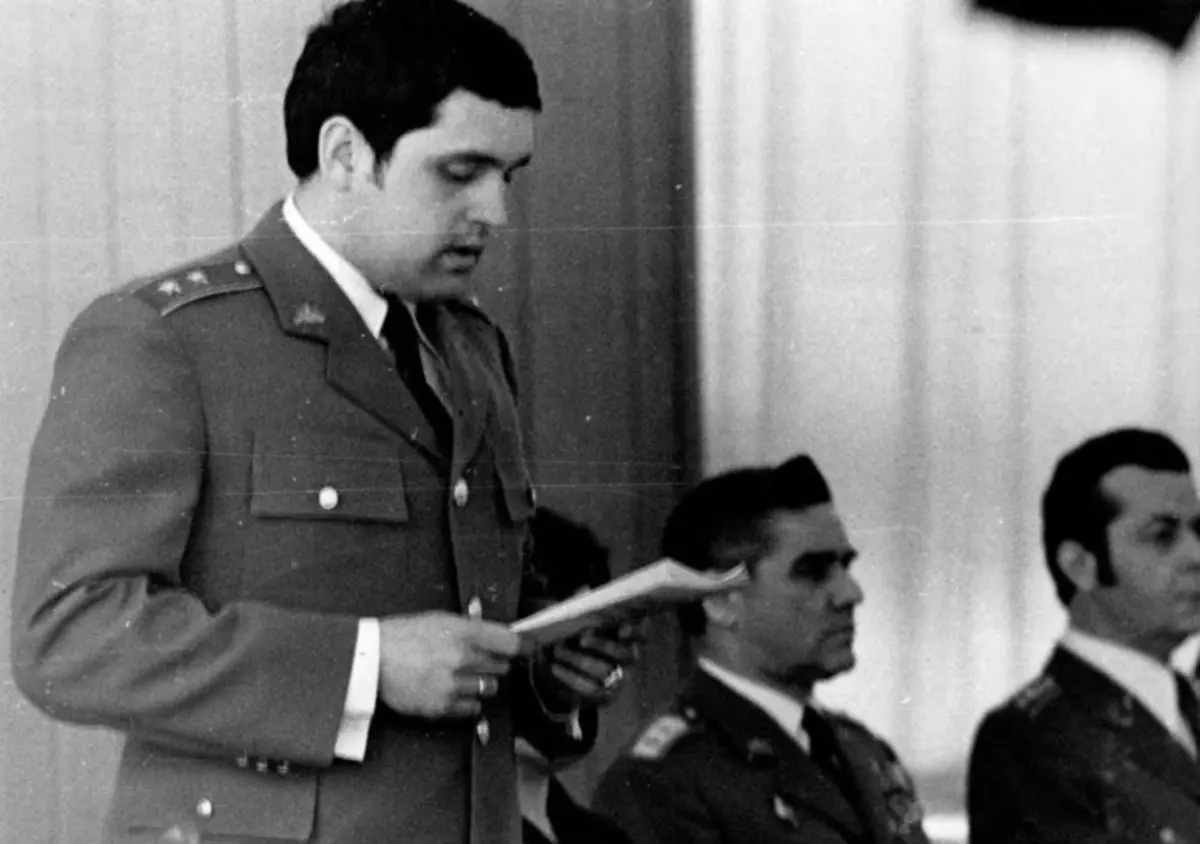
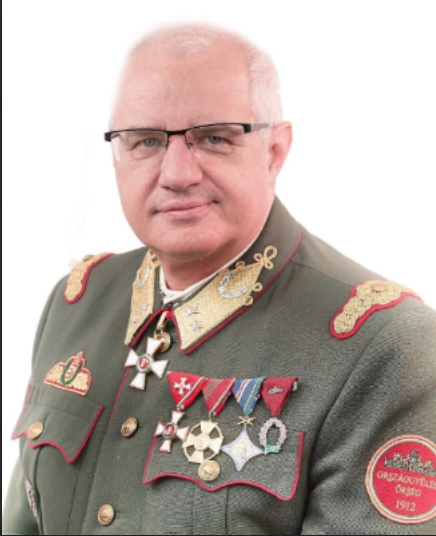
Dr Parádi József, CSc, retired police colonel, retired college professor
Short biography
Parádi József, CSc, retired college professor, is a figure who has played a
determining role in the teaching and research of Hungarian law enforcement
history. He completed his secondary schooling at the Árpád Grammar School
in Óbuda in 1968, then obtained an officer's diploma at the Lajos Kossuth
Military College in 1972. In 1978 he took a master's degree in political
science at Eötvös Loránd University (ELTE). He also defended his
dissertation at the Faculty of Humanities of ELTE in 1984, under the title
“Border Control in Dualist Hungary”. In 1990, within the framework of the
official procedure of the Qualifying Committee of the Hungarian Academy of
Sciences (MTA TMB), he obtained the candidate's degree in military science
on the subject of the border control of the Kingdom of Hungary between the
two world wars (CSc). He conducted basic research in the subject area of
both degree-awarding dissertations.
In the course of his academic career he brought about a significant change
in the approach to the history of the maintenance of public order: as a
result of his work, the practice of the field, burdened by ideologically
influenced interpretations, shifted towards source-based, critical
historical methodology. His principal research fields are the
organisational development and personnel conditions of the law enforcement
bodies of the Kingdom of Hungary (1867–1945), and the regional impact of
the Anglo-Saxon and continental law enforcement models in the nineteenth
and twentieth centuries. He is the founder and President of the Szemere
Bertalan Hungarian Law Enforcement History Scientific Society (SZBMRTT,
official court registration number: 01-02-0003324), as well as founder and
editor-in-chief of numerous journals and book series. He played a
significant role in the nurturing of talent, among other things through his
work in doctoral training and as a supervisor and master teacher. At the
Department of Hungarian Legal History of the Faculty of Law and Political
Sciences of Eötvös Loránd University and at the Police Officer College he
taught subjects based on his own research findings until his retirement.
Relations with international and Hungarian professional and scholarly communities
1. TEMPUS PHARE projects (1998–2001)
Under the leadership of Dr Parádi József, and with the support of the
education department of the Hungarian Ministry of the Interior, the
projects “The cooperation experience of European police forces” and
“Teaching the experience of the Schengen Agreement” — TEMPUS PHARE
INSTITUT BILDUNG JEP 13154-98 and 13165-98, awarded to the Police Officer
College — were realised in 1998–2001. These projects also formed the
theoretical foundations for the alignment of Hungarian border control,
adapted to Eastern European requirements, with Western European
expectations.
2. Austrian and French gendarmerie history relations
He established professional cooperation with the former Austrian
gendarmerie (Bundesgendarmerie) and with the Historical Service
of the French National Gendarmerie (Service historique de la
Gendarmerie nationale – SHGN; successor body from 2005: Service
historique de la Défense, SHD), culminating in the holding of joint
events.
3. National Security Service (NBSZ)
On his initiative, professional scholarly cooperation developed between the
SZBMRTT, which he leads, and the Hungarian National Security Service
(NBSZ); as a result, Dr Parádi József personally took part as a lecturer
in the training providing the replacement of the NBSZ's personnel, and
laid the foundations for the strengthening of training in the history of
the profession within the organisation. Within the framework of the
cooperation, joint scholarly events and exhibitions on the history of the
profession within the organisation were created, and several scholarly
volumes were published jointly.
In the course of this work the volume entitled “1872 Anleitung zum
Kundschatsdienste” was published. The genesis of the 2014 edition is
instructive in itself. The volume was produced in cooperation between
several organisations — the National Security Service, the Constitution
Protection Office, the Hungarian Archives Delegation in Vienna and the
Szemere Bertalan Hungarian Law Enforcement History Scientific Society —
and the series preface explicitly names the Evidenzbüro as the
“parent organisation” of the reconnaissance services of the successor
states: after the First World War the experiential core of several European
intelligence services grew out of it. This genealogical observation means
that the principles codified here are to be read not as a regional
curiosity but as the common heritage of the European reconnaissance
profession — and that their loss would be not a local but a continental
loss of learning. Accordingly, the preface to the edition identifies the
preservation of professional memory as its purpose: the instructions are
addressed to the generation that can no longer acquire this knowledge from
a living master.
4. Relations established with professional historical organisations
4/1. Wiener Kriminalmuseum
On the initiative of Dr Parádi József — in view of the shared past —
cooperation was established between the SZBMRTT and the Vienna
Wiener Kriminalmuseum, led by Mag. Harald Seyrl, realised in
joint events and programmes; the museum operates in the historic
Leopoldstadt district, in the Seifensiederhaus, and is one of Austria's
oldest law enforcement history collections.
4/2. Deutsche Gesellschaft für Polizeigeschichte
In 1994, developing the professional contacts of previous years, he
established cooperation with the German Police History Society
(Deutsche Gesellschaft für Polizeigeschichte), operating in
reunified Germany, resulting in joint professional events.
4/3. MKCsBK (Hungarian Royal Gendarme Veterans Association)
A cooperation agreement was concluded with the leadership of the MKCsBK
(Hungarian Royal Gendarme Veterans Association), which is registered in
the United States but operates across every inhabited continent. The
MKCsBK — originally an organisation of gendarmes forced into emigration,
which, as the number of surviving gendarmes declined, was transformed
into an organisation concerned with the exploration of the history of the
force — presents the history of the Hungarian Royal Gendarmerie on its
website with unparalleled thoroughness. The website functions in practice
as an archive containing the overwhelming majority of written documents
dealing with the history of the force, which, in addition to the general
public, offers researchers preparing to defend their dissertations and
habilitations in the field a source base arranged to archival standards
and in large part not to be found elsewhere.
Publicly published sources relating to the cooperation agreements and professional projects above
- Zachar József: A csendőrség a XIX. században. Első Nemzetközi Csendőrségtörténeti Kollokvium, Párizs, 2000. március 10–11. [The Gendarmerie in the Nineteenth Century. First International Colloquium on Gendarmerie History, Paris, 10–11 March 2000] — Hadtörténelmi Közlemények, vol. CXIV (2001), no. 1, pp. 203–209. HU-ISSN 2732-3676 · ISSN-L 0017-6540 · epa.oszk.hu/00000/00018/00016/08kronika.htm
- Parádi József: « Gendarmerie hongroise : naissance et fonctionnement (1881–1914) » — RGN, n° 202, 4e trim. 2002, pp. 109–114. In: Édouard Ebel – Benoît Haberbusch – Jean-Noël Luc: Bibliographie de l'histoire de la Gendarmerie Nationale. Paris, 2025, CRGN–SHD–Centre d'histoire du XIXe siècle. 212 pp. · force-publique.net — Bibliographie de l'histoire de la gendarmerie (2025)
- Hegyaljai Mátyás: Bemutatkozik az Európai Rendvédelem-történeti Szövetség [The European Law Enforcement History Association presents itself] — Law Enforcement History Newsletter, vols. XIII–XV (2006), nos. 22–26, pp. 168–171. HU-ISSN 1785-3257 · epa.oszk.hu — LEHN, vols. 13–15, nos. 22–26 (PDF)
Cryptographic identifier
- GPG key2E0844B46B3AC477
- GPG fingerprint512A 10A6 83CD DAFA A00C BECF 2E08 44B4 6B3A C477
Institutional director / Signing authority: Dr József Parádi — verified on
keys.openpgp.org.
Honours and awards
12 October 2020
Knight's Cross of the Order of Merit of Hungary (Military Division)
In recognition of his significant role in establishing the discipline
of Hungarian law enforcement history and in the foundation of the
Szemere Bertalan Hungarian Law Enforcement History Scientific Society.
Magyar Közlöny, 2020, no. 232, p. 7380 ·
Resolution 495/2020 (X. 28.) KE · KEH/04031-2/2020 ·
Magyar Közlöny online
20 August 2015
Out-of-turn promotion to retired police colonel
Promoted out of turn to retired police colonel in recognition of his
outstanding professional career.
BM-001/2874/2015 · Hivatalos Értesítő, 2015, no. 44 ·
Hivatalos Értesítő online